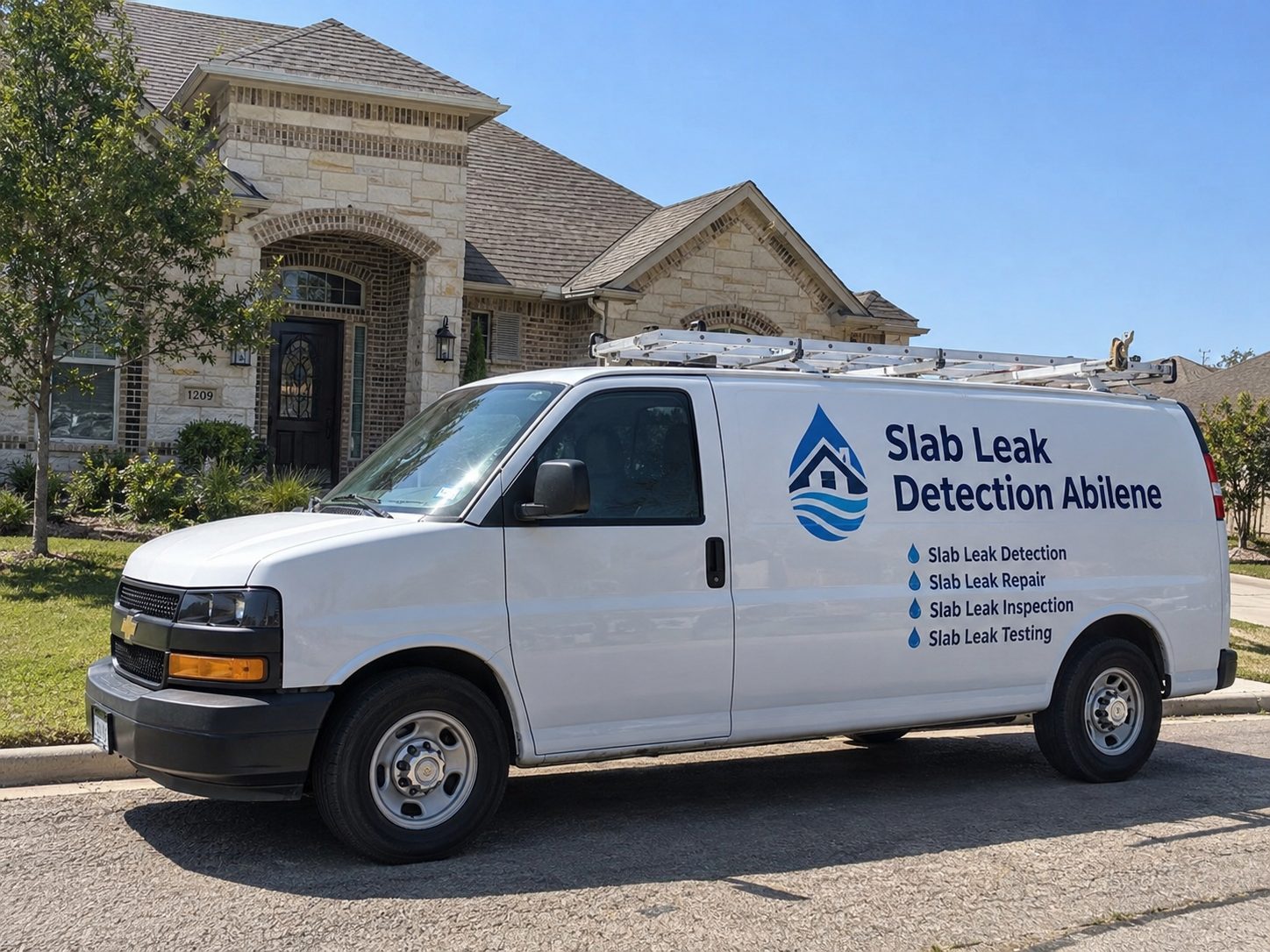
Focused Hidden-Leak Investigation
Slab Leak Detection in Abilene, TX
Find the likely source before you start opening floors. Get a Free Estimate
Focused Hidden-Leak Investigation
Find the likely source before you start opening floors. Get a Free Estimate
When a water line leaks beneath a concrete slab, the pipe is hidden and the symptoms can appear somewhere else. You might hear water when every fixture is off, notice a warm section of flooring, see a higher-than-normal water bill, find moisture near the foundation, or experience a change in water pressure. Those are reasons to investigate, but they do not tell you exactly where the leak is.
Slab Leak Detection Abilene uses a structured process to move from symptoms to a more useful location. We look at water use, plumbing behavior, pressure, line isolation, temperature, sound, and the likely plumbing layout as appropriate for the property. The goal is not to promise an impossible view through concrete. It is to gather enough consistent evidence to narrow the problem and support a practical repair decision.
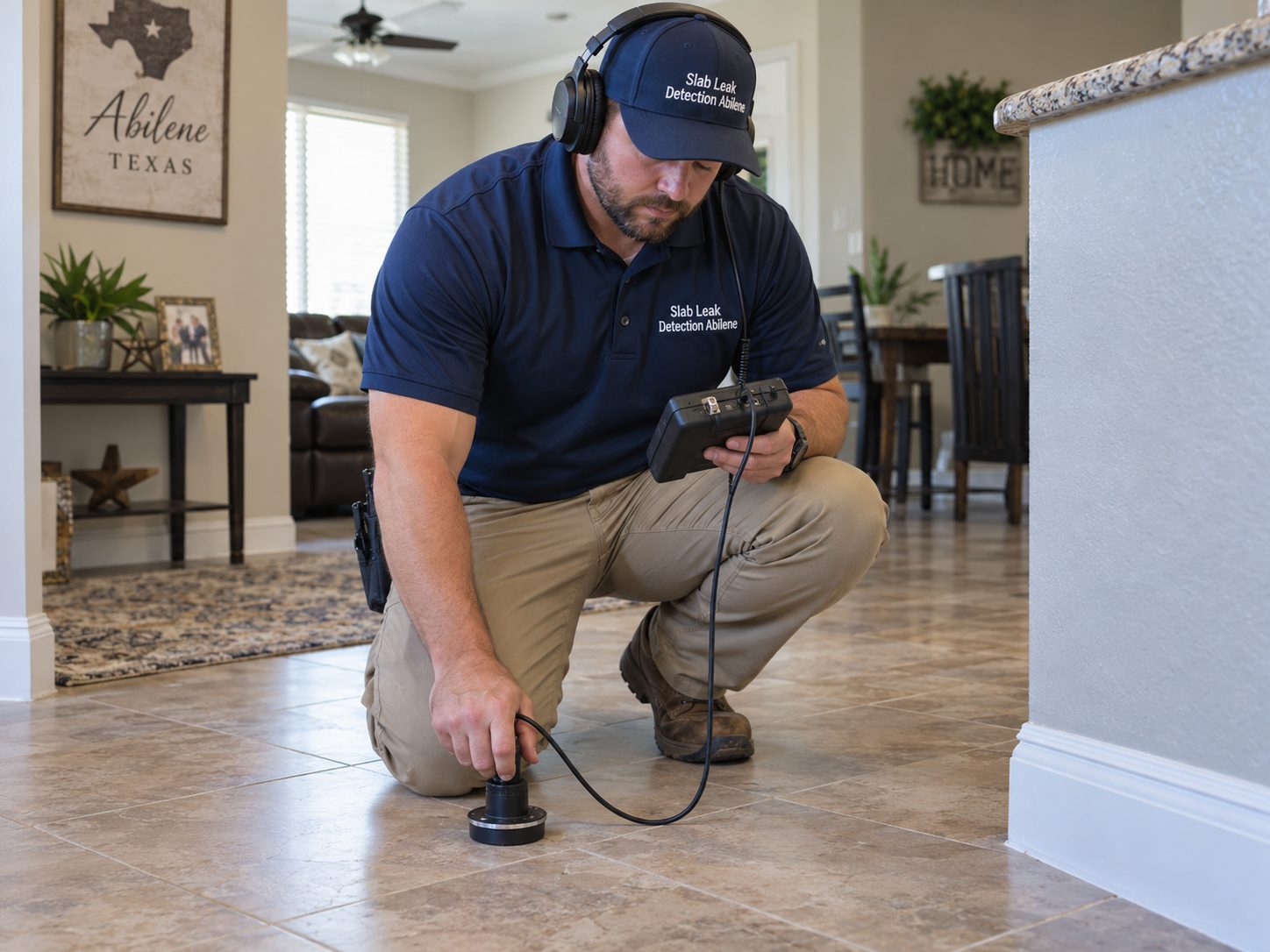
A successful detection visit should answer more than whether something seems wrong. It should help identify the likely affected plumbing and reduce the area that needs to be considered for repair.
The first question is whether water is being lost when it should not be. Meter activity, pressure behavior, water usage, and accessible plumbing observations can help determine whether an active hidden leak is a reasonable explanation for the symptoms. If the evidence does not support a pressurized plumbing leak, that information is useful too. It can prevent unnecessary slab work and redirect attention to another moisture source.
When conditions allow, testing can help distinguish between different portions of the plumbing system. A warm floor and hot-water-side pressure loss, for example, tell a different story than unexplained cold-water loss with no temperature change. Narrowing the affected plumbing reduces the number of potential pipe routes that need detailed investigation.
Once the likely line is understood, attention can move to the areas where sound, temperature, moisture, layout, and other evidence overlap. No one clue is treated as absolute proof by itself. The strongest locations are those supported by several observations that make sense together.
Detection has value because it guides action. Depending on the findings, the next step may be a localized repair, further testing, consideration of a reroute, or investigation of a different source entirely. We explain the reasoning so you understand why a particular next step is being considered.
| Service | Estimated Cost | Average |
|---|---|---|
| Initial detection visit | $250-$500+ | Varies by property |
| Testing and detailed locating | $350-$800+ | Varies by complexity |
| Extended multi-zone investigation | $500-$1,000+ | Varies by scope |
These are general planning ranges, not quoted prices. Actual cost depends on the plumbing layout, property size, accessibility, symptoms, and how much testing and locating work is needed.
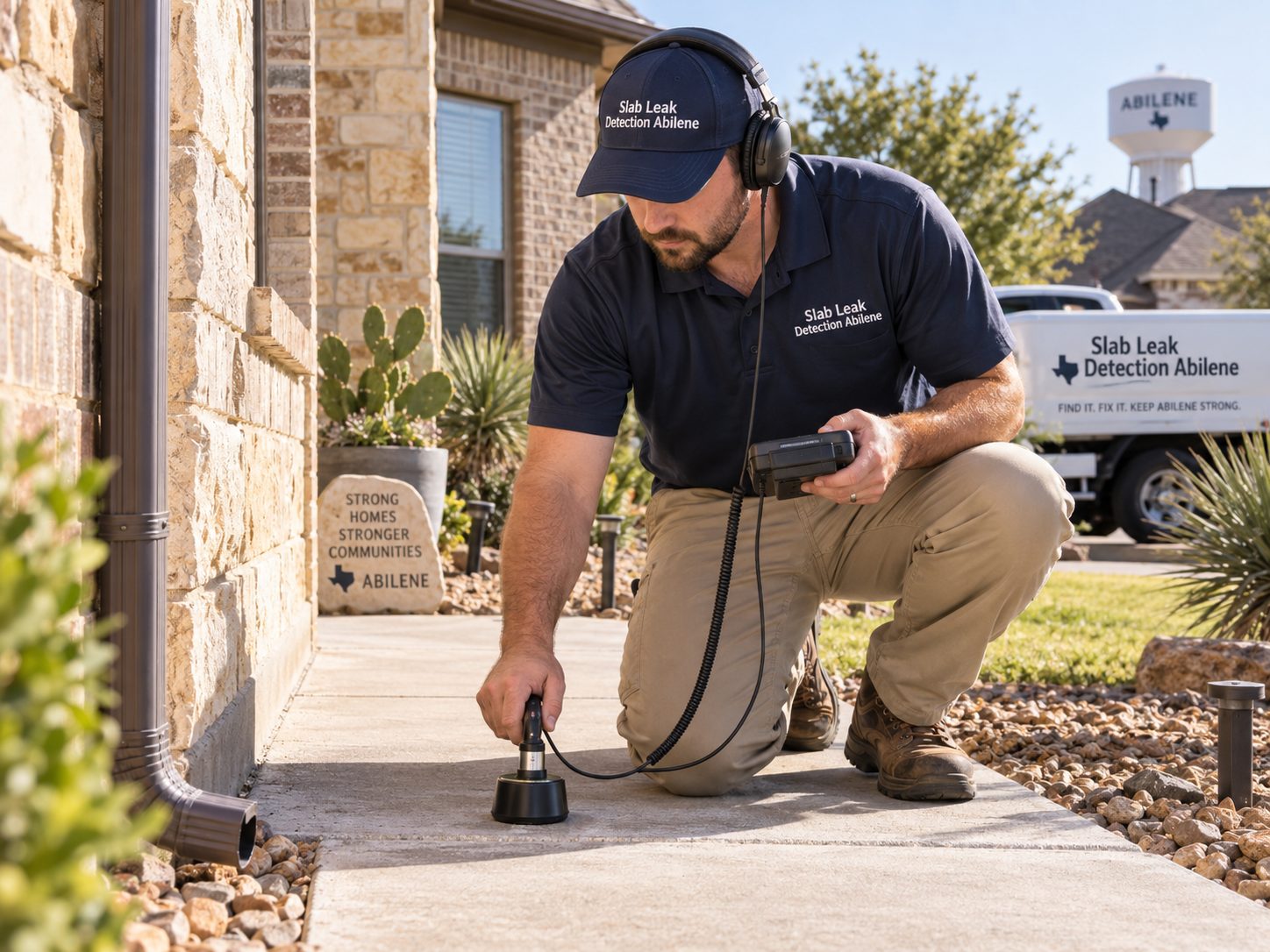
We concentrate on the hidden plumbing problem first so repair decisions can be based on a clearer understanding of what is happening.
We move from broad evidence toward a narrower location instead of jumping to conclusions from the first symptom.
You should understand what was tested, what the results suggest, and what uncertainties remain.
We work in Abilene, Tye, Impact, Potosi, Elmdale, Buffalo Gap, and nearby parts of the region.
If the water bill, floor, meter, or plumbing system is telling you something is wrong, let us help narrow the source.
Free — no obligations
We start with what you have observed and how the symptoms have changed over time.
Plumbing and meter behavior are evaluated to determine whether an active concealed leak is likely.
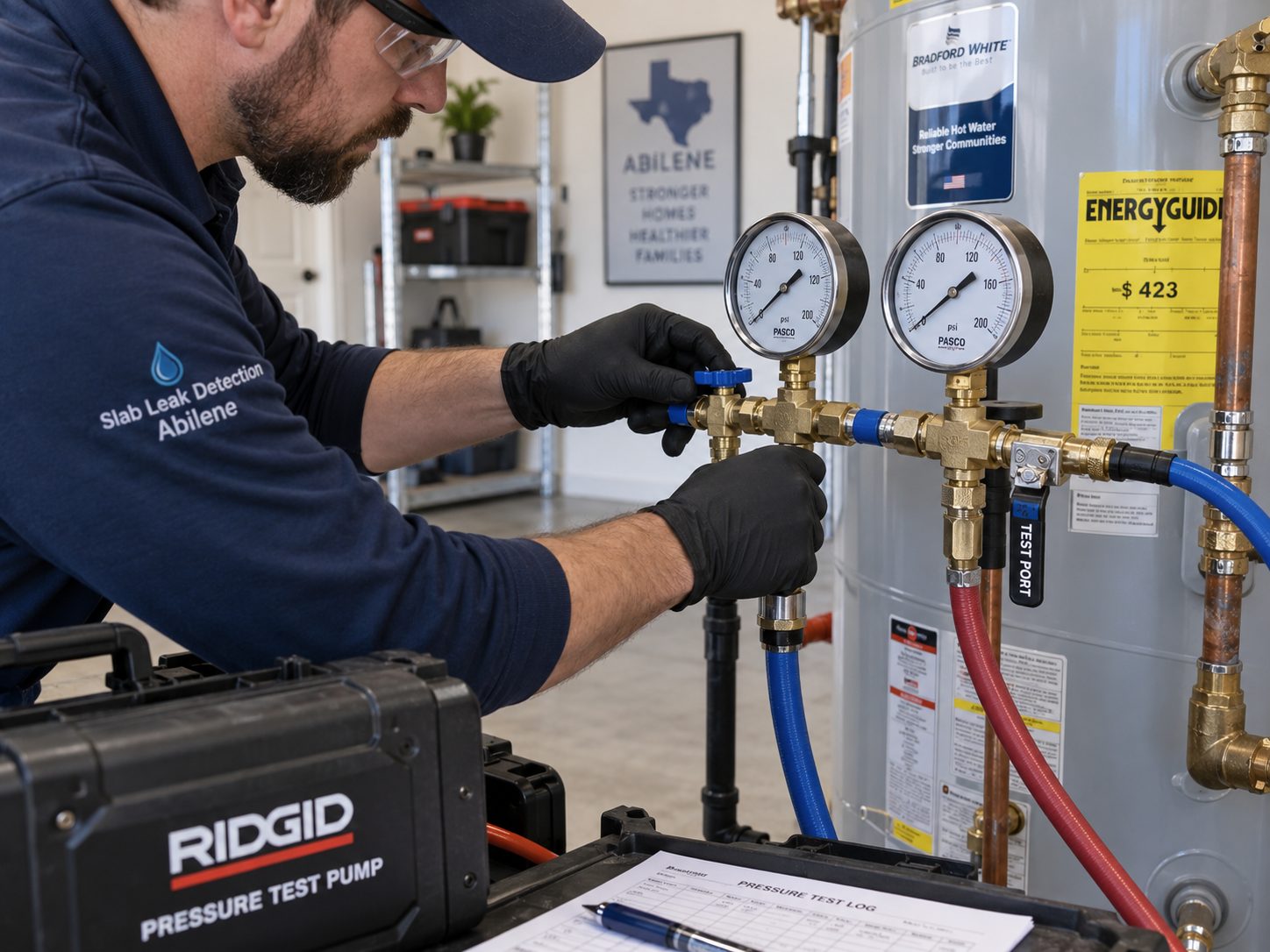
Pressure and isolation findings are used where appropriate to reduce the number of possible pipe runs.
Temperature, sound, moisture, plumbing layout, and other evidence are compared to identify the most likely leak area.
We discuss what the findings mean and what should be considered before choosing an access or repair method.